
NEWLY RELEASED STATE PAPERS EXPOSE LOYALIST CLAIMS AND HISTORIC NORTHERN IRELAND DIALOGUES
A detailed analysis of 2025 State Papers and their implications for understanding sectarian narratives, government engagement, and peace-process history.
Introduction - Unsealed Archives and Historical Clarity
The Irish National Archives’ Annual Release of State Papers for 2025 has opened nearly 12,000 files from across government departments, including material from the Department of the Taoiseach, Department of Foreign Affairs, Department of Justice, and the Attorney General’s Office. These files span a range of critical national and international issues, especially covering Anglo Irish relations, the peace process, and administrative decisions between 1994 and 2004.
National Archives
Among the newly available records are minutes and internal notes from high level meetings between Irish government officials and representatives of loyalist communities that illuminate provocative claims and tensions about the post Good Friday peace landscape. Here, we break down the key revelations.
1. The Loyalist Commission Meeting with Taoiseach Bertie Ahern (2003)
One of the most notable disclosures in the 2025 State Papers relates to a June 2003 meeting in Dublin between then Taoiseach Bertie Ahern and a delegation representing loyalist paramilitaries and community figures, known as the Loyalist Commission.
The Irish Times
The Commission included leaders from Ulster Volunteer Force (UVF), Ulster Defence Association (UDA), Red Hand Commando groups, and the Orange Order. The meeting was also attended by Church of Ireland Archbishop Robin Eames and the Orange Order’s grand secretary, Mervyn Gibson.
TheJournal.ie
Main Allegations Raised by Loyalist Representatives
During the discussions:
Loyalist delegates asserted that republican groups were attempting to create “no-go” areas for Protestants in rural parts of Northern Ireland, effectively marginalising loyalist communities and prompting fears of systematic exclusion.
The Irish Times
Delegates described what they claimed was an ongoing “strategy” of republican intimidation, suggesting a tactic that reached back into historic rhetoric and conflict.
TheJournal.ie
Jim Wilson a then Ulster Unionist Party MLA noted that dozens of loyalist families had been forced from their homes in interface areas like Cluan Place adjacent to the Short Strand in East Belfast, implying this violence and intimidation were not widely reported or addressed by authorities.
The Irish Times
These statements reflect deep mistrust within loyalist constituencies toward both national and cross border political structures in the early 2000s.
2. Government Engagement and Taoiseach’s Responses
In the released documents, Bertie Ahern’s responses are also recorded:
He acknowledged his longstanding personal and political commitment to peace and stability in Northern Ireland, noting his own family background and his efforts within the peace process framework.
The Irish Times
Ahern defended the political concessions made in the peace process, including amendments to Articles 2 and 3 of the Irish Constitution, emphasising this as a gesture of trust and partnership toward peace. However, this was met with scepticism by the loyalist delegation.
The Irish Times
Delegates questioned perceived asymmetries in how republican and loyalist violence were treated, especially around issues of prisoner release under the Good Friday Agreement. Ahern’s notes show he addressed questions about specific cases, such as IRA prisoners held in Castlerea, stressing that the IRA had “disowned” those individuals.
The Irish Times
These exchanges suggest a complex negotiation between political symbolism, community perception, and practical peace process outcomes.
3. Broader Context - State Papers and the Peace Process
The release of these State Papers should be understood within a larger archival effort:
Ireland’s National Archives has continued expanding access to official records, including Anglo Irish peace process files, under a phased reduction of the traditional “30-year rule” to 20 years for certain categories of material.
National Archives
Files on Northern Ireland from 1994 through 2003 now provide historians and the public insight into government deliberations around the Good Friday Agreement and post agreement tensions.
National Archives
Beyond loyalist debates, the 2025 release also illustrated other historical considerations, such as a secret study by Ireland’s attorney general’s office on potentially asking the United Nations to establish a “trusteeship” in Northern Ireland during intense Troubles periods, showing the breadth of contingency planning that once occurred.
The Irish Times
4. Historical Framing: Tensions, Clashes, and Legacy
To fully contextualise the loyalist delegation’s claims, it is important to note that the early 2000s particularly 2002 witnessed intense sectarian violence, such as the Short Strand clashes, where extended violence forced many families to flee homes and contributed to loyalist narratives of threat and exclusion.
Wikipedia
Moreover, the history of Northern Ireland policing, collusion investigations (e.g., Stevens Inquiries on loyalist-state links), and post Agreement reforms adds further complexity to how communities understood justice and protection in the post Troubles era.
Wikipedia
Conclusion & What the State Papers Reveal and Why It Matters
The 2025 release of State Papers has provided rare primary documentation of historical dialogues, perceptions, and grievances that shaped the early 21st-century peace landscape.
Key takeaways include:
Direct engagement between Irish government leadership and loyalist representatives, capturing community mistrust in mainstream peace narratives.
TheJournal.ie
Specific accusations of republican intimidation in rural Northern Ireland that were central to loyalist discussions.
The Irish Times
The complexity of reconciling historical grievances with peace process achievements, as seen in debates over constitutional issues and prisoner status.
The Irish Times
The ongoing value of State Papers as a window into past decision making, offering scholars and the public evidence to better understand the intertwined narratives of national government, paramilitary communities, and peace negotiations.
National Archives
As archival releases continue, they will doubtless fuel further research, debate, and reflection on how Ireland and the United Kingdom managed and at times struggled with the long road from conflict to peace.
By Aaron Joyce, Newswire, L.T.T Media; Newsdesk; 28 December 2025
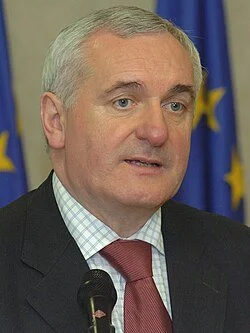
Bertie Ahern