
L.T.T Media Analysis: The Ireland Trans Rights Debate — Honest, Robust, Hard Questions for Our Political Class
L.T.T Media Analysis: The Ireland Trans Rights Debate — Honest, Robust, Hard Questions for Our Political Class
This is not anti-trans. This is not hate. This is clear-eyed, fact-based journalism questioning the rush, the confusion, the messaging and the political framing of a complex social issue by political elites in Ireland.
In January 2026, Sinn Féin’s leader Mary Lou McDonald urged calm and common sense in public discourse on transgender issues — a message that, on the surface, many might agree with. She told The Times that discussions about trans policy should be respectful and grounded in care and safety, especially where children are concerned. McDonald cited her own trans sibling and called for case-by-case assessments on sensitive matters such as single-sex spaces and detention placements. The Times
And yet, despite these appeals for respect, the real political narrative has been less about clarity and more about ambiguity — a pattern that demands scrutiny.
1. “Calm” Isn’t a Policy — It’s a Political Escape Hatch
McDonald’s repeated emphasis on calm, respect and listening sounds reasonable until you realise that it’s a strategy that effectively avoids taking definitive positions on some of the most contested aspects of Ireland’s transgender policy debates. Many commentators and members of the public — including those on social forums reviewing the interview — concluded they still had no real sense of what Sinn Féin’s stance actually is. Reddit
Such vagueness might be defensible in a local parents’ meeting, but not when it’s shaping national policy and public opinion.
When a major national leader tells us she’s against division and wants “to listen” — yet fails to articulate where she stands on deeply controversial elements like gender recognition versus biological sex, puberty blockers, medical standards of care, and equality of opportunity — that’s not leadership. It’s strategy.
2. Historical Context: Promises vs. Practice
It’s important to record that Sinn Féin once explicitly supported extending gender recognition laws and reforming trans healthcare towards an informed consent model, consistent with international standards. Sinn Féin
But in recent years:
The party quietly dropped explicit demands to extend gender recognition and healthcare reform from its general election manifesto, folding LGBTQ+ issues into broader social rights language — a rightward shift that has not been publicly explained. uk.news.yahoo.com
Sinn Féin’s 2025 conference on gender identity policy was held without external groups present, suggesting a preference for internal deliberation over public engagement. The Irish Times
The party has supported aligns with a ban on puberty blockers for under-18s in Northern Ireland, aligning with UK policy that was widely criticised by trans advocates. TheJournal.ie
These shifts aren’t trivial. They reflect a party walking back from earlier, clearer commitments — and that deserves investigation, not platitudes.
3. Not Anti-Trans — But Critical of the Social Momentum
Let’s be explicit: questioning the pace, methods, medical frameworks, age thresholds, and terminology in these discussions is not the same as being anti-trans.
A robust democracy requires honest debate about:
What “gender identity” means in law versus everyday lived experience
How Ireland should set age thresholds for medical treatment
Whether global medical standards (e.g., WPATH) should be benchmarks — or if Ireland must independently evaluate evidence
How to protect everybody’s rights — including cisgender women’s sports and spaces — without diminishing trans people’s dignity
Across social media and public commentary, many ordinary citizens feel that the debate has been rushed, poorly framed, or dominated by ideological shorthand rather than evidence-based policy. That — not anti-trans sentiment — is at the heart of genuine public concern.
4. Two Ministers Who Personalised the Issue — In Very Different Ways
The debate in Ireland isn’t limited to party leaders trying to navigate media storms. We have two government ministers who brought their own families’ experiences into public discourse:
Mary Lou McDonald (Sinn Féin) has openly referenced her trans sibling in interviews, framing the conversation as personal and urging that policy be anchored in respect — but without definitive policy prescriptions. The Irish Times
Mary Butler (Fianna Fáil) spoke in the Dáil about her trans son, urging compassion and fairness while also acknowledging the “hurtful” nature of online debates and the need for fact-based engagement. data.oireachtas.ie
Both cases are powerful personal narratives. But personal experience does not automatically constitute public policy expertise — especially where complex medical, legal and ethical issues intersect.
5. What Really Matters — Healthcare, Evidence, Transparency
The heart of the dispute isn’t whether people should treat each other with dignity. That’s basic humanity.
The heart of the dispute — and where journalism must dig — is:
What evidence are we using to guide Ireland’s policy?
Are decisions being steered by empirical research or cultural activism?
Are medical standards as robust and accessible as they should be?
Is the government prepared to explain its policy choices to a skeptical public in clear terms?
Right now, too much of the conversation feels like emotion without evidence, political hedging, or posturing — and that is genuinely maddening for people on all sides who want solutions, not slogans.
Conclusion — A Call for Clearer Debate
Ireland deserves clarity. It deserves transparency. It deserves policy grounded in evidence, not obfuscation. It deserves leaders who can articulate what they stand for, why they stand there, and how they will protect every aspect of Irish civil society — not just comfortable talking points.
This issue isn’t going away. It’s only going to get bigger. And unless politicians start giving people straight answers — not vague platitudes — the chaos we’re seeing won’t diminish, it will intensify.
Aaron Joyce, Newswire, L.T.T Media; Newsdesk; January 8, 2026
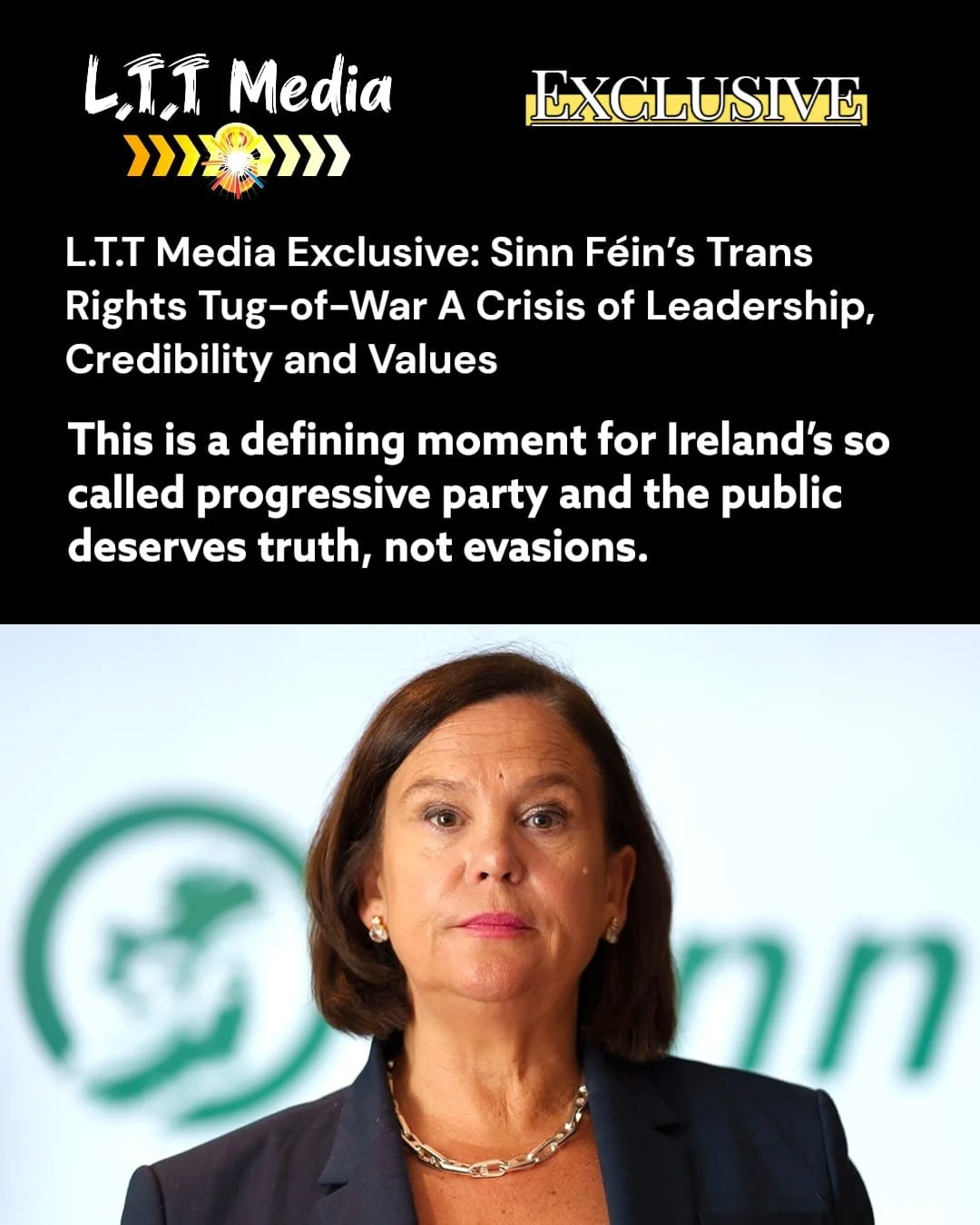
Creator: Fran Veale - Credit: © Fran Veale, Copyright: © Fran Veale