
Trump’s Foreign Policy Escalation: From Venezuela Military Action to Threats Against Greenland
U.S. President Donald Trump’s second term has been defined by a markedly assertive foreign policy that, in the past year, has expanded beyond traditional theatres of conflict. From a dramatic military operation in Venezuela to renewed threats targeting the Arctic island of Greenland, the United States has sparked international concern over its strategic direction. European governments, NATO allies, and global institutions are now pushing back against what they describe as destabilising rhetoric and actions.
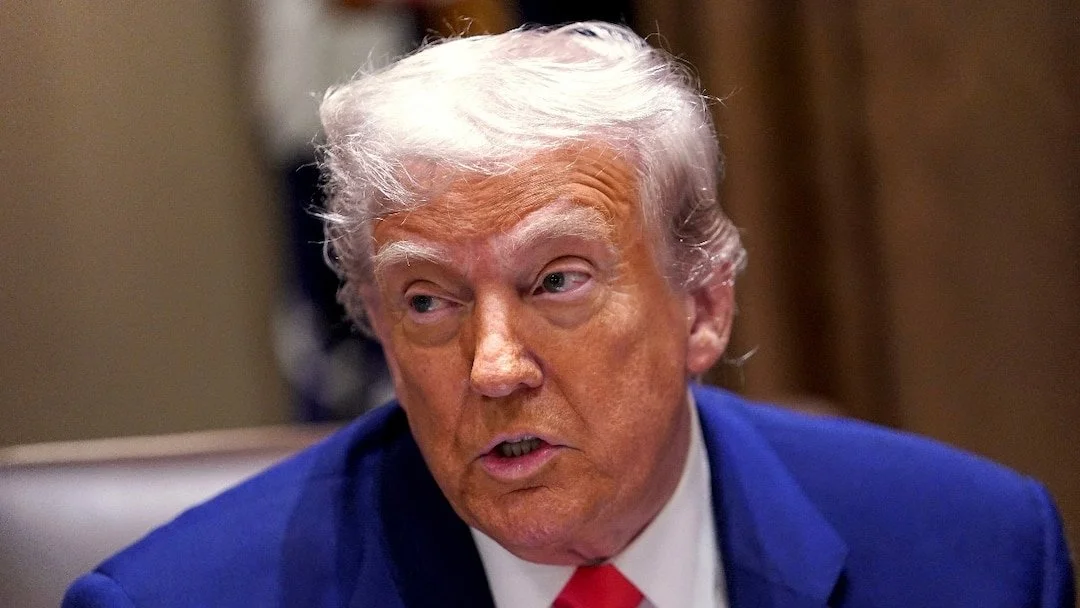
United States President Donald Trump
Report:
Since resuming office last year, President Trump has pursued an aggressive global posture, announcing and executing military actions against multiple nations and signalling strategic ambitions that have alarmed allies and rivals alike. The U.S. commander-in-chief framed his National Security Strategy around the principle that “the affairs of other countries are our concern only if their activities directly threaten our interests,” a formulation that has underpinned a range of controversial decisions.
One of the most consequential and controversial of these actions was the surprise overnight military operation in Venezuela in early January, which led to the capture of President Nicolás Maduro and effectively decapitated the country’s government. This dramatic development followed months of U.S. strikes on Venezuelan oil infrastructure and maritime vessels alleged to be linked to narcotics trafficking.
But Trump’s assertiveness has not stopped at Latin America’s doorstep. In comments to The Atlantic, the President publicly reiterated a long-standing assertion — one first floated in 2019 — that the United States “needs” the Arctic island of Greenland for defence and geopolitical leverage. He stated that the U.S. would pursue control of the territory “one way or the other,” adding that making a formal deal would be simpler than coercion.
Greenland is an autonomous territory within the Kingdom of Denmark, which retains responsibility for its foreign affairs and defence. Trump’s renewed comments have been met with unequivocal rejection from Danish and Greenlandic leaders, who insist the island is not for sale and must remain under Danish sovereignty.
International Backlash:
Europe’s political leadership has been vocal in condemning the U.S. posture. Danish Prime Minister Mette Frederiksen warned that any attempt to seize control of Greenland would threaten the future of NATO — the alliance that has underpinned transatlantic security since World War II. She argued that such actions would jeopardise global peace and trust among allies.
European capitals including Berlin, Paris, London, and other NATO members have reaffirmed their support for Greenland’s autonomy and criticised the notion of U.S. annexation. Experts say that Greenland’s strategic Arctic position — particularly as Russian and Chinese interests in the region grow — makes it a flashpoint in great-power competition.
Strategic Implications:
Analysts say Trump’s foreign policy reveals a shift from traditional U.S. leadership toward transactional, status-driven decision-making. Critics argue that rather than offering coherent geopolitical strategy, the administration’s actions often appear rooted in personal posturing and domestic political signalling. This pattern, they contend, undermines long-standing alliances and diminishes America’s capacity to influence international norms.
Furthermore, Trump’s approach has revived discussions about the Monroe Doctrine’s legacy, which historically asserted U.S. dominance in the Western Hemisphere and discouraged European intervention. Some commentators have even dubbed Trump’s stance the “Donroe Doctrine” in reference to its reshaped, more aggressive geopolitical posture.
The past year of U.S. foreign policy under President Trump has unsettled global diplomatic and security structures, drawing sharp reactions from allies and rivals alike. From Venezuela to Greenland, the trajectory appears to favour confrontational tactics over multilateral cooperation — a shift that could have long-term repercussions for international order, alliance integrity, and geopolitical stability.
Aaron Joyce, Newswire, L.T.T Media; January 20, 2026
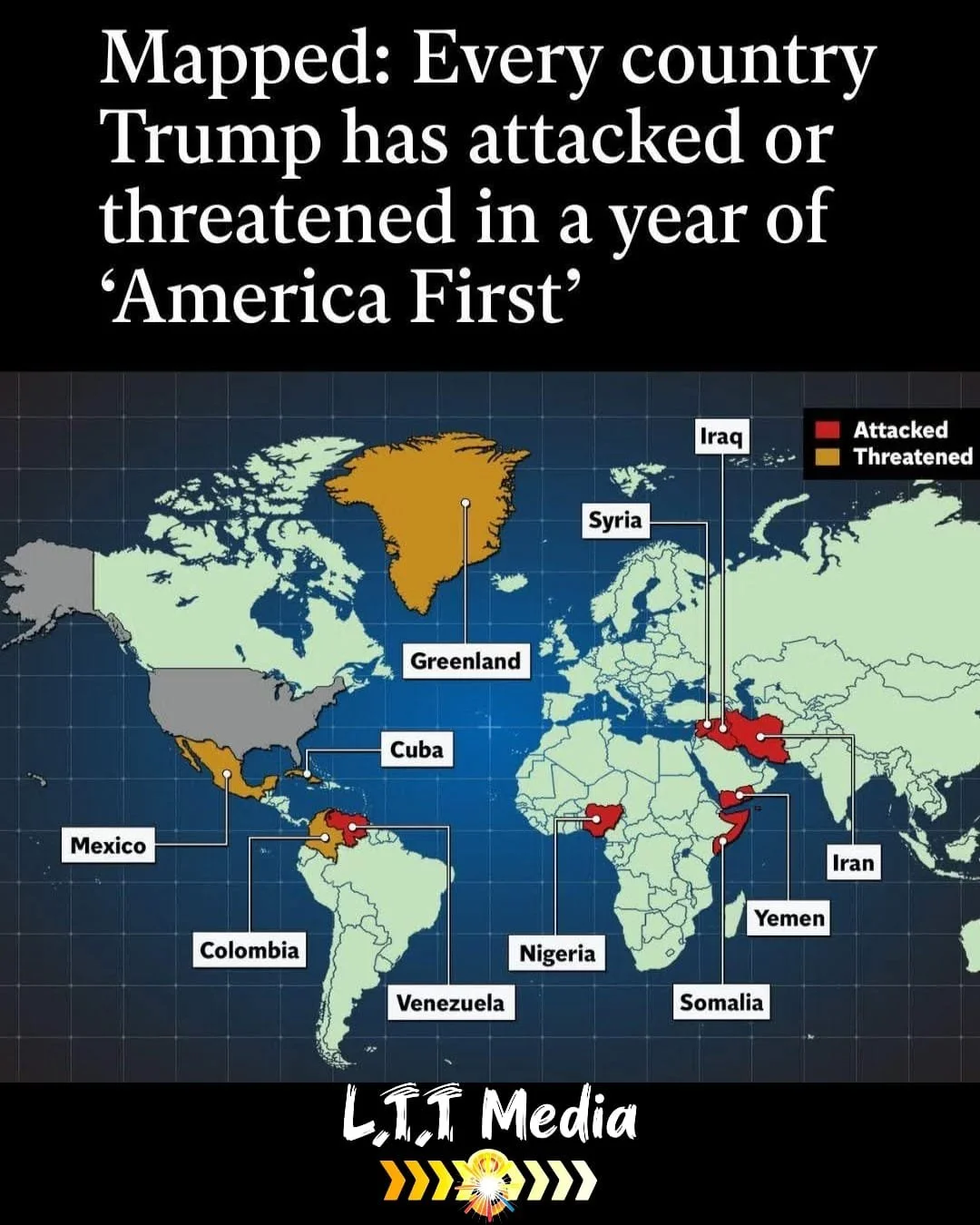
Credit Map Source - Independent UK