North Korea Conducts Long-Range Strategic Cruise Missile Test Under Kim Jong Un’s Supervision
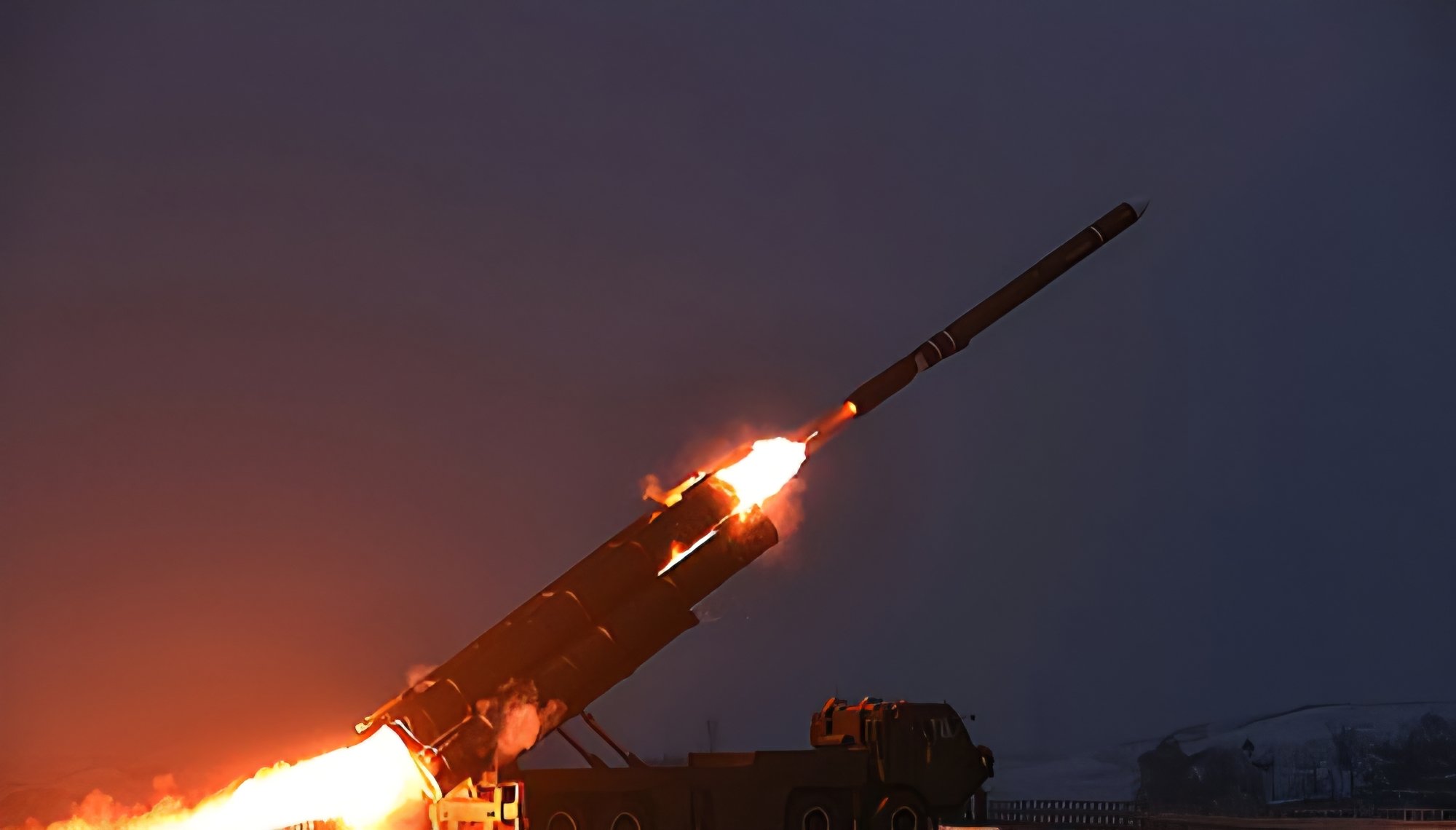
North Korean leader Kim Jong Un has overseen a long-range strategic cruise missile launching drill, according to state media reports carried by Reuters, in a move likely to heighten tensions across East Asia and beyond.
The test, which took place on Sunday, December 28, involved cruise missiles launched over waters to the west of the Korean Peninsula. North Korea’s official Korean Central News Agency (KCNA) said the missiles successfully hit their designated targets, with Kim reportedly expressing satisfaction with the results.
According to KCNA, the drill was designed to verify the reliability, precision and readiness of North Korea’s nuclear deterrent forces, framing the launch as a “responsible exercise” intended to reinforce the country’s capacity for a rapid counter strike in the event of perceived external threats.
Strategic significance
While cruise missiles differ from ballistic missiles, military analysts note that long range cruise missiles can be harder to detect and intercept due to their low altitude flight paths and manoeuvrability. North Korea has previously indicated that some of its cruise missile systems are capable of carrying either conventional or nuclear warheads, raising concerns among regional and global security experts.
South Korea’s military confirmed that it had detected the launches, stating that it was closely monitoring North Korean activity and maintaining a heightened state of readiness. Officials in Seoul warned that further missile tests could follow in the coming days, particularly as Pyongyang approaches key political milestones in the new year.
Rising regional tensions
The launch comes amid an already strained security environment on the Korean Peninsula, marked by increased military cooperation between North Korea and Russia, continued US-South Korea joint military exercises, and a breakdown in meaningful diplomatic engagement.
North Korea has repeatedly condemned joint drills by Washington and Seoul, describing them as rehearsals for invasion, a claim denied by both countries, which insist the exercises are defensive in nature.
The missile test also precedes preparations for the Ninth Congress of the Workers’ Party, expected in early 2026, where Kim Jong Un is widely anticipated to outline future military and economic priorities.
International response
While immediate international reaction has been cautious, such tests typically draw condemnation from the United States, Japan, and European allies, who argue that they violate United Nations Security Council resolutions restricting North Korea’s missile development.
Diplomatic efforts to curb Pyongyang’s weapons programme have largely stalled in recent years, with sanctions remaining in place and negotiations effectively frozen.
Outlook
The latest launch underscores North Korea’s continued focus on expanding and demonstrating its strategic weapons capabilities, even as global attention is divided by conflicts in Ukraine and the Middle East. Analysts warn that repeated tests increase the risk of miscalculation in an already volatile region.
As 2025 draws to a close, the missile drill serves as a reminder that the Korean Peninsula remains one of the world’s most persistent and dangerous geopolitical flashpoints.
Aaron Joyce
Newswire, L.T.T Media
Newsdesk
28 December 2025