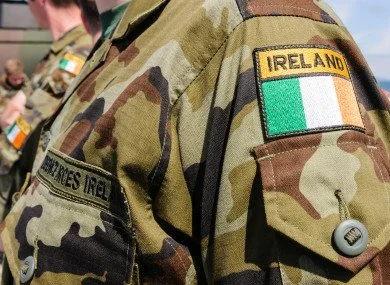
Irish Defence Forces Warned They Will Miss Recruitment Targets by Years Amid Security Challenges
The Irish Defence Forces are now projected to fall significantly short of government recruitment and staffing targets, raising concerns about national security preparedness as global threats intensify. Official assessments indicate that the goal of expanding military personnel to 11,500 by 2028 — a target recommended by the Commission on the Defence Forces — is increasingly unattainable.
Defence officials and military representatives say that achieving the numbers required to meet strategic objectives will take years longer than planned. Based on internal estimates, reaching an interim target of 9,739 personnel could extend as late as 2031, even with increased recruitment efforts. The target of 11,500 troops would not be reached until approximately 2035 under current conditions.
Lieutenant Colonel Conor King, general secretary of the Representative Association for Commissioned Officers (RACO), described the situation bluntly: “This is what failure looks like,” attributing the shortfall to slow implementation of key recommendations and a lack of coordinated progress across recruitment and retention initiatives.
Recruitment Gains Still Don’t Close the Gap
The Defence Forces have recorded an increase in applications and recruit numbers in recent years, partly driven by modernised recruitment processes, broader advertising campaigns, and improved entry pathways for candidates with specialist skills. In 2025, applications reportedly rose by roughly 34 percent compared with the previous year.
A newly established Joint Induction Training Centre in Gormanston, Co. Meath, has also improved training throughput, centralising basic training for recruits across the Army, Air Corps and Naval Service. The facility is designed to train up to 900 recruits annually, though full capacity has yet to be realised.
Retention and Specialist Pay Remain Major Obstacles
Despite these improvements, retention of trained personnel remains a persistent issue. Defence forces representatives warn that pay and conditions for technical specialists are insufficient, and many trained members are moving into higher-paying roles in the private sector. The Representative Association of the Permanent Defence Force (PDFORRA) has publicly stated that government action is needed to prevent the loss of personnel with critical skills.
Training and career progression challenges have also been highlighted. Critics argue that steps such as aligning cadet pay more closely with private soldiers and reforming pension terms could improve retention and make Defence Forces careers more attractive — proposals that have yet to be fully enacted.
Will Struggles Continue ?
Ireland’s recruitment struggles come at a time of heightened international instability and shifting European security dynamics. Governments across the continent are reassessing defence postures in response to geopolitical tensions and evolving hybrid threats. Neutrality has not insulated Ireland from these pressures, prompting debate about its defence capabilities and future strategic planning.
While Defence Forces officials acknowledge the challenges, they insist there remains strong interest among the public in military careers. The Department of Defence emphasises that the 11,500 figure is intended to support enhanced capability rather than serve solely as an absolute benchmark, and that ongoing efforts are underway to refine recruitment strategies and workforce planning.
By Aaron Joyce, Newswire, L.T.T Media; January 20, 2026