
Ireland Faces Demographic Turning Point as Birth Rates Continue to Fall
Ireland is entering 2026 facing a significant demographic challenge as birth rates continue to decline, raising concerns among economists, policymakers, and social analysts about the country’s long term population stability, workforce capacity, and economic sustainability.
Recent analysis and commentary, including warnings highlighted by the National Economic and Social Council (NESC), suggest that Ireland risks entering a so‑called “vicious downward cycle” if current trends persist. Such a cycle would see fewer births leading to an ageing population, a smaller working‑age cohort, and increasing pressure on public finances, healthcare, and social protection systems.
Birth Rates in Sustained Decline
Data from the Central Statistics Office (CSO) show that Ireland’s total fertility rate has fallen steadily over the past decade, moving well below the replacement level of 2.1 children per woman. While Ireland once stood out among European countries for its comparatively high birth rate, that demographic advantage has narrowed sharply in recent years.
The decline is being driven by multiple factors, including later family formation, rising housing costs, childcare affordability issues, job insecurity among younger adults, and broader cultural shifts around marriage and parenthood. Experts note that these pressures disproportionately affect people in their 20s and early 30s traditionally the core child bearing age group.
Economic and Social Consequences
According to NESC and other policy advisory bodies, a prolonged fall in birth rates could have far reaching consequences. A smaller workforce would limit economic growth potential, reduce tax receipts, and place added strain on pension systems at a time when life expectancy continues to rise.
Public services could also face mounting challenges. An ageing population typically increases demand for healthcare and long term care services, while a shrinking younger population may struggle to sustain funding models built on inter generational contribution.
In addition, regional disparities could deepen, with rural communities particularly vulnerable to population decline as younger residents migrate to urban centres or leave the country entirely.
Migration Not a Complete Solution
While net inward migration has helped offset population pressures in recent years, analysts caution that migration alone cannot fully resolve demographic imbalance. Reliance on migration without addressing underlying family formation challenges may create new social and infrastructural pressures, particularly in housing, education, and healthcare.
NESC has stressed that a balanced approach is required one that combines sustainable migration policy with targeted measures to support families and encourage people who wish to have children to do so without excessive financial or social barriers.
Policy Choices Ahead
As Ireland moves into 2026, demographic policy is increasingly viewed as a long term strategic issue rather than a short term political concern. Potential responses under discussion include expanded childcare supports, housing affordability measures, improved work life balance protections, and reforms aimed at reducing the cost of raising children.
Without meaningful intervention, experts warn that the demographic trends now emerging could become increasingly difficult and costly to reverse. The choices made over the coming years may determine whether Ireland can stabilise its population structure or face a prolonged period of demographic and economic strain.
As the data continues to evolve, Ireland’s declining birth rate is no longer a distant projection, but a present day reality demanding sustained attention and informed policy action.
Aaron Joyce, Newswire, LTT Media; Newsdesk; 31 December 2025
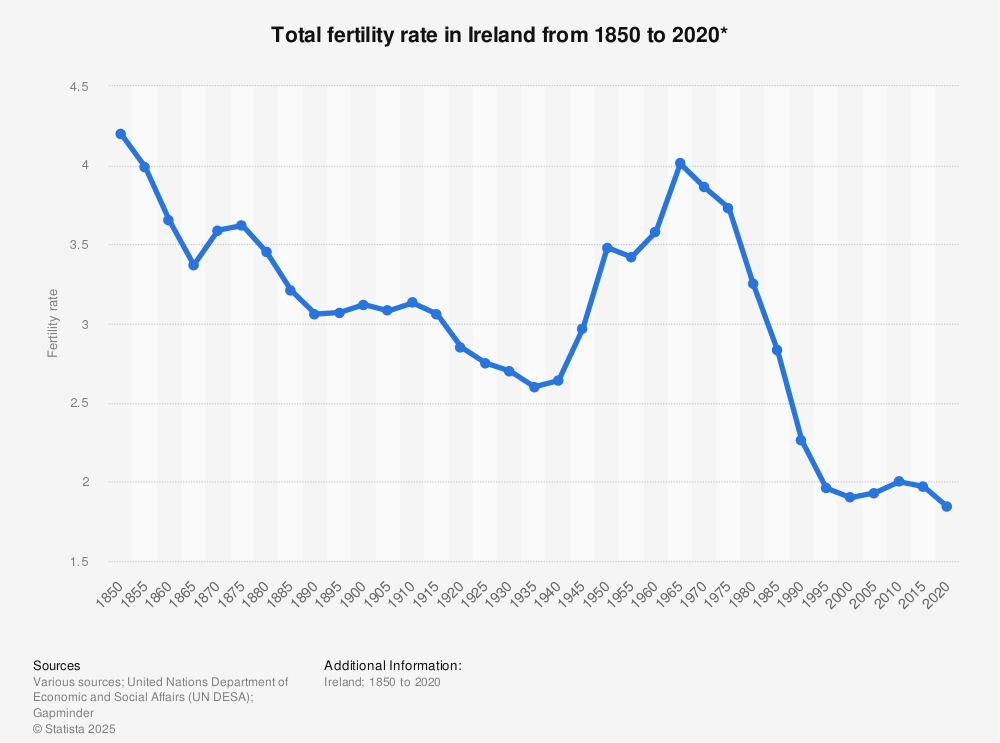
Image Credit - Statista